
Habitat Report Writing Made Simple: A Guide for Young Writers

Updated: Sep 27

Are you writing habitat reports with your students? Learning about where animals live, and why, is a wonderful way to connect science and writing skills. This guide walks through the exact process, so your students can go from choosing a habitat to finishing a polished, illustrated report.
What Is a Habitat Report?
A habitat report is a piece of informative writing where a student researches a specific habitat and shares what they learned with a reader. Students research categories like location, climate, plants, and animals, then organize their findings into a written report.
Habitat reports pair naturally with science units, giving students a chance to practice informative writing while building background knowledge about the world around them.
How to Write a Habitat Report in 7 Steps
Step 1: Choose a Habitat
Students can find their habitat topic in a few different ways:
Choose their own habitat
Pick a habitat out of a hat
Be assigned a habitat by the teacher, often tied to a science unit
A ready made habitat topics list takes the guesswork out of this step, giving students enough choice to feel ownership without an overwhelming decision.
Want a quick visual reminder of the whole process? Grab the free Report Writing 7 Step Poster and hang it up for students to reference anytime.
Step 2: Research the Habitat
Once students have their habitat, it is time to gather information using:
Kid friendly websites
Books
Magazines
Science texts or nonfiction readers
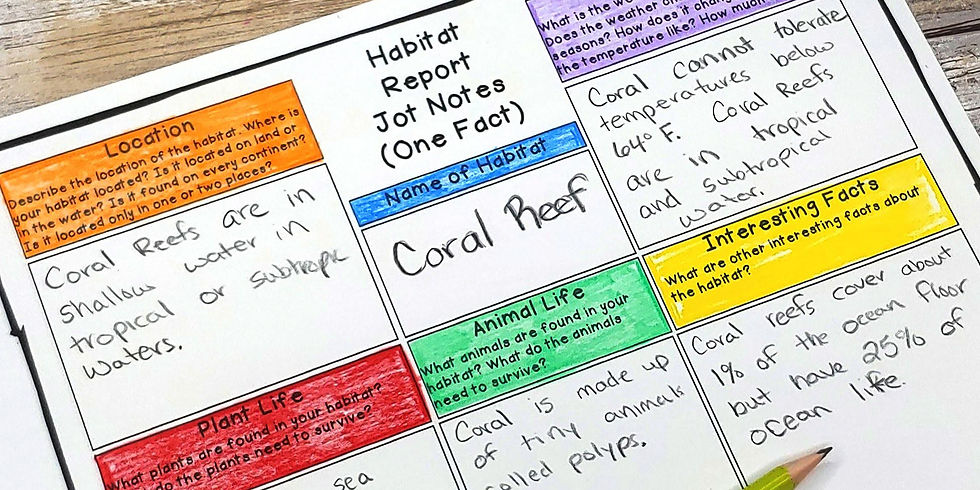
Step 3: Make Jot Notes
This is often the trickiest step for young writers, and it is also the most important one. Jot notes teach students to pull out key facts about their habitat instead of copying whole sentences from their source.
A jot notes template built around clear research categories makes this step much easier. Common categories for a habitat report include:
Location
Climate
Plants
Animals
Human impact
Other interesting facts
Structured note taking helps students find success from their very first attempt at an informative report, and offering different note taking options for different skill levels helps students focus on picking important facts instead of writing everything down.
Step 4: Write the Draft
With jot notes complete, students turn their facts into paragraphs. Each research category becomes its own paragraph, so a report naturally ends up with a paragraph on location, one on climate, one on the animals that live there, and so on.
Step 5: Revise and Edit
Now it is time to make the writing stronger. A simple, differentiated checklist helps students revise and edit their habitat report at their own level.

Step 6: Write the Good Copy
After editing, students write their final good copy of the habitat report, using a differentiated template or regular writing paper depending on what they need.
Step 7: Illustrate the Habitat Report
The last step is adding a scene that shows the habitat, its plants, and its animals, based on what students learned in their research. It is a satisfying way to wrap up the project.
Bonus Step: Assess the Report (Optional)
Once the report is finished, a simple rubric makes grading straightforward. Many teachers also like to include a self assessment, so students reflect on their own work before it's handed in. For a closer look at how the assessments work, including self, peer and teacher options, check out How to Use Report Writing Resources in Your Classroom.
How to Differentiate Habitat Report Writing
Every classroom has a range of writers, and a habitat report is a great place to meet students where they are.
For reluctant writers, use a template that only asks for one fact per research category, keeping the task manageable and building confidence.
For students who are ready for a challenge, use a template that asks for three or more facts per category, pushing their research and writing further.
Printable and Digital Versions
This process works whether you are using paper templates or digital slides. Digital versions let students complete their jot notes, drafts, and final habitat reports right on the slide, which is a nice option for classrooms using Chromebooks or iPads.
A Simple Recap
Writing a habitat report does not need to be complicated. To recap, the seven steps are:
Choose a habitat
Research the habitat
Make jot notes
Write a draft
Revise and edit
Write the good copy
Illustrate the report
If you would like ready to use templates for every step of this process, including jot notes, draft pages, rubrics, and checklists, take a look at the Habitat Report Writing resource on Teachers Pay Teachers.


