
How to Get Reluctant Writers Writing (No More Blank Pages)

Updated: 4 days ago

"I don't know what to write."
If you teach Grade 1, 2, or 3, you've heard those words more times than you can count. You set up a writing activity. Most of the class gets going. Then you look up and see four kids with nothing on their page.
One is drawing on his eraser. One is staring out the window. Two are waiting for you to come over and tell them what to do.
This is the problem Step 1 of the Writing Teacher's Roadmap solves. The goal is simple: every child writes, and nobody sits in front of a blank page.
Here's how to get there with those reluctant writers.
Why Do Some Kids Freeze in Front of a Blank Page?
Most kids freeze because they don't know how to start. It's rarely about not wanting to write. The task feels too big or too unclear.
When I worked in learning assistance, I sat beside a lot of stuck writers.
Almost every time, the reason was one of these:
The task is too big. "Write a story" has no clear starting point.
They don't know what done looks like. Is it one sentence? A page? A picture?
They're worried about spelling. Some kids would rather write nothing than write a word wrong.
The topic doesn't connect. It's hard to write about something you don't care about.
The good news? You can fix every one of these before the activity even starts.
What Makes a Writing Activity Easy to Start ... Even For Reluctant Writers?
Choose short, focused activities on familiar topics with a clear finish line. Kids should be able to finish in about 10 minutes.
Before you hand out any writing activity in Step 1, run it through this quick check:
There's one clear task.
The topic comes from the kids' own lives or interests.
Most students can finish in 10 minutes or less.
Students can see an example of the finished product.
There's a starter, a frame, or a word bank for kids who need it.
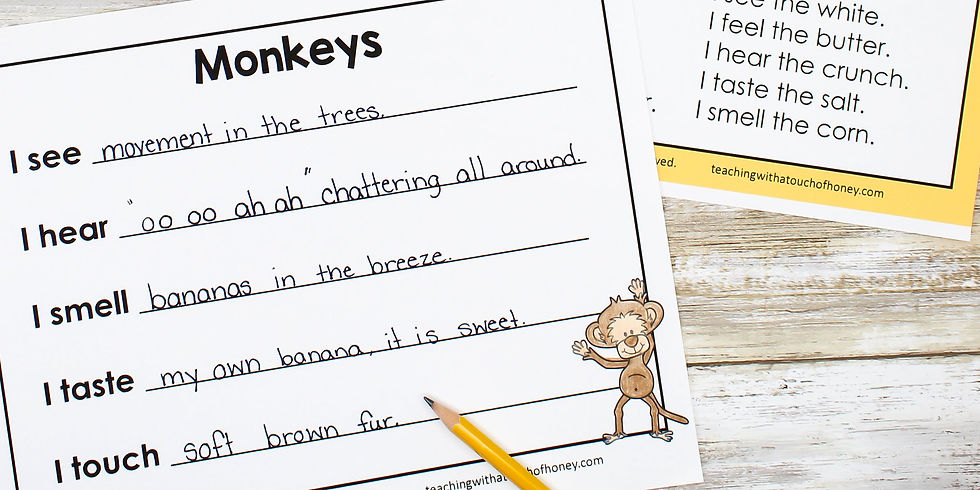
Activities that pass the check
Senses poems. Kids fill in "I see... I hear... I smell..." about a place they know. Each line is short and there's no wrong answer. [TpT link: Senses Poem]
Acrostic poems. Kids write one word or phrase for each letter of an animal name. The frame does half the work. [TpT link: Farm Animal Acrostics]
List writing. "Write 5 things you'd pack for a trip to the beach." Lists feel easy, even to the most hesitant writers.
Topic lists. Give kids a short list of topics to choose from, like pets, snacks, or favourite places.
Notice what these have in common. They're short, they have structure, and every child can be successful.
How Do Examples and Modelling Help Young Writers?
A finished example shows kids what success looks like. Writing one together in front of the class takes away the guesswork.
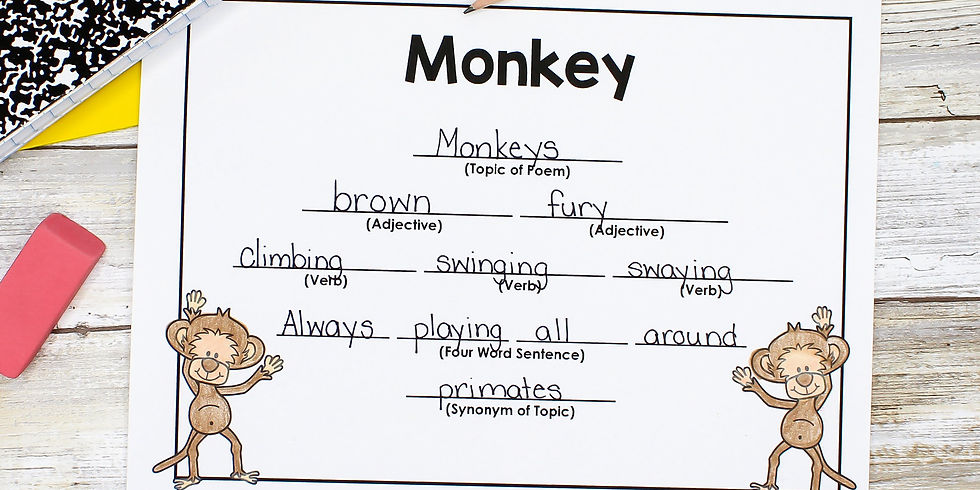
Try a quick think aloud before students write. Stand at the board and talk through your own thinking:
"I'm going to write about my cat. Hmm, what does she do all day? She sleeps in the sun by the window. I'll write that down."
It takes two minutes. But now every child has heard how a writer finds an idea and turns it into a sentence.
Leave your example up where students can see it. Kids who get stuck can look back at it for help.
"This was a great resource to use for beginning research. The organization templates made it easy to teach and kept students organized." - Animal Report, TpT Review
Which Supports Help Hesitant Writers Get Started?
Word banks, sentence starters, and drawing first give hesitant writers a way in. Set them out before the activity starts, not after kids get stuck.

Here are five supports that work well in the primary grades:
Draw first. Let kids sketch their idea, then write about their picture.
Talk first. Have partners tell each other their idea before they write it.
Word banks. Post the words kids will likely need, with a small picture beside each one.
Sentence starters. Give a first few words, like "My favourite animal is..."
Permission to guess. Tell kids to spell words the best they can. You can fix spelling later.
That last one is a big deal. When kids know spelling won't be judged in Step 1, they write more and worry less.
For more ideas, see Writing Supports That Help Many Students at Once.
How Do You Know Step 1 Is Done?
When every student starts writing right away, three days in a row, your class is ready for Step 2.
I use the power of 3. Introduce a short writing activity three days in a row. Watch what happens when you say "You can start."
If every child picks up a pencil and gets going, Step 1 is done. If a few still hesitate, keep going. Adjust the activity, add a support, and try again.
Some classes finish Step 1 in a few days. Others need a couple of weeks. Both are completely normal. You can read more in The Power of 3: How to Know When to Move On in Writing.
Your Next Stop on the Roadmap
Getting every child writing is the first stop on the Writing Teacher's Roadmap. Keep activities short. Choose topics kids care about. Show them what done looks like. Have supports ready before they need them.
Once your class is writing without hesitation, you're ready for Step 2: How to Build a 10 Minute Daily Writing Routine.
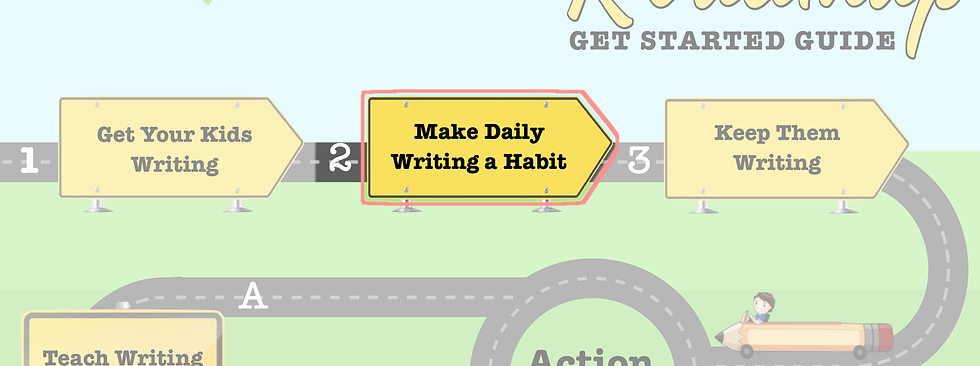
New to the roadmap? Start with the full Writing Teacher's Roadmap.
Not sure where your class is on the roadmap? Take the free Writing Roadmap Quiz. You'll find your starting point and get the Writing Teacher's Roadmap Get Started Guide.


