
How to Build a 10 Minute Daily Writing Routine


The assembly ran long. Then there was indoor recess. Then the fire drill.
By the time you look at the clock, writing is the thing that gets cut. Again.
It happens to every teacher. But when writing only shows up once or twice a week, kids lose momentum. They forget the routine. They come to the page cold every time.
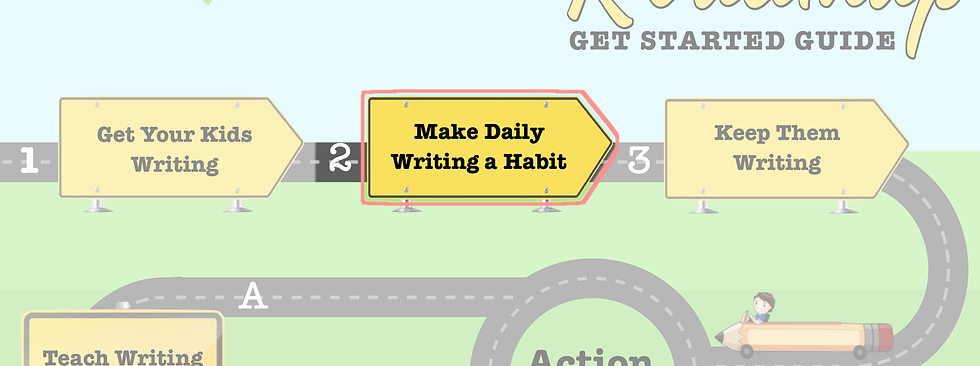
Step 2 of the Writing Teacher's Roadmap fixes this. The goal is to make writing a daily habit, so short and so predictable that it almost runs itself.
How Long Should Primary Students Write Each Day?
Five to 10 minutes a day is enough to establish a writing routine. Short daily writing builds more skill than one long writing block once a week.
Think about reading. We don't expect kids to read for an hour on Friday and skip the rest of the week. Writing works the same way. Small, steady practice adds up.
Early in Grade 1, you might start with 5 minutes. By the spring, many classes happily write for 10 minutes or more. Let your class set the pace.
When Is the Best Time of Day for Writing?
The best time is whatever time you can protect every single day. Many teachers use morning arrival or the first few minutes after recess.
Here are three times that work well:
Morning arrival. Kids come in, unpack, and start writing. It settles the room.
After recess or lunch. Writing brings the energy down and gets kids focused.
Before home time. Kids write about something from their day.
Whichever time you choose, keep it the same. Put it on your visual schedule. When kids know writing always comes after the morning bell, they walk in ready.
How Many Topic Choices Should You Offer?
Offer 2 or 3 topic choices plus "own choice." That gives kids control without overwhelming them.

Too many choices can freeze a young writer just like no choice at all. A short list works best.
Here's what a topic board might look like on a Monday:
My pet (or a pet I would like to have)
A rainy day
My favourite snack
Own choice
"Own choice" is important. Some kids arrive bursting with something to say about their weekend or a new baby cousin. Let them write it.
If you'd like ready made topics, my Writing Topic Lists and Daily Journal Prompts give you months of ideas.
What Are Target Questions and How Do You Use Them?
Target questions are 2 or 3 simple questions about a topic. Each answer becomes a sentence, so kids always know what to write next.

Target questions are my favourite support for Step 2. They turn "I don't know what to write" into "I just need to answer these."
Here are three examples:
A Snow Day
What did you do?
Who were you with?
How did you feel?
My Best Friend
Who is your best friend?
What do you like to do together?
Why are they a good friend?
If I Could Fly
Where would you go?
What would you see?
What would you do when you landed?
Write the questions under each topic on your board. For students who need more help, talk through the questions together before they start.
Once a child says the answers out loud, writing them down feels much easier.
"My students REALLY enjoy this. Especially when I let them pick & choose their prompts!" - Ashley H., Summer Writing Prompts for Rings, TpT Review
Why Focus on Ideas Before Spelling?
Kids who worry about spelling write less and choose safer words. In Step 2 you're building a habit. Mechanics come later, in Step 3.
Picture a Grade 2 student who wants to describe a whale. She thinks of the word "enormous." Then she remembers her last page covered in red corrections. So she writes "big" instead.
That's the trade we want to avoid. During daily writing, respond to the idea first. "I love how you described the whale!" goes a long way.
You'll still teach capitals, periods, and spelling. That happens in Action A: Teach Writing Skills, once the habit is strong.
What Tools Make Daily Writing Easier?
A simple journal and a steady supply of topics are all you need. Keep them in the same spot so kids can get started on their own.
A writing journal. A notebook or stapled booklet each child keeps all year. [TpT link: Journal Templates]
A topic board. A space on your whiteboard or a chart for the day's choices.
A word wall. Common words and topic words kids can copy.
A timer. Kids like seeing how long they have left.
One bonus: a year of daily journal entries shows amazing growth. Parents love seeing September next to June.
How Do You Know Step 2 Is Done?
When your class starts daily writing on their own, three days in a row, Step 2 is done.
That's the power of 3 again. You shouldn't need to remind anyone to get out their journal. Kids know the time, they know the routine, and they get started.
Keep the daily routine going all year. It becomes the foundation for everything in Step 3.

Your Next Stop on the Roadmap
A daily writing routine keeps kids writing, even on the busiest days. Keep it short. Keep it at the same time. Offer a few choices, add target questions, and celebrate ideas first.
Your next stop is Step 3, where you'll spend most of your year. Start with How to Teach Writing Skills One at a Time.
Missed Step 1? Read How to Get Reluctant Writers Writing, or see the full Writing Teacher's Roadmap.
Not sure where your class is on the roadmap? Take the free Writing Roadmap Quiz. You'll find your starting point and get the Writing Teacher's Roadmap Get Started Guide.


