
How to Teach Writing Skills One at a Time

Updated: 4 days ago

In September, you taught capitals and periods. Your class practised. They got it.
By October, half the journals look like one long sentence with no capitals in sight.
If that feels familiar, you're not doing anything wrong. Young writers need a different approach to skills. They need one skill at a time, lots of practice, and a way to keep old skills from slipping.
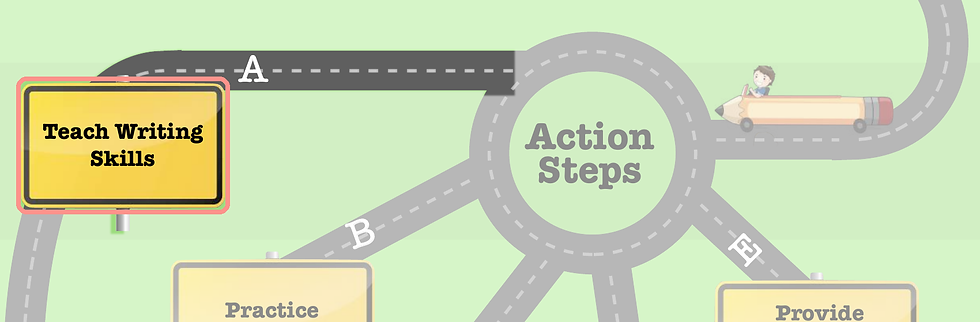
That's Action A on the Writing Teacher's Roadmap. It's one of five actions in Step 3, where you'll spend most of your school year.
Which Writing Skills Should Grade 1 to 3 Students Learn?
Focus on four areas: word choice, sentences, paragraphs, and mechanics. Choose the skills your curriculum and your students need most.
Here's a sample list to get you started. Adjust it for your grade and your class.
Word choice
Using describing words (colour, size, shape)
Using the five senses
Choosing strong action words, like "dashed" instead of "went"
Sentences
Writing a complete sentence
Starting with a capital and ending with a period
Adding details (who, what, where, when)
Joining ideas with "and" or "because"
Paragraphs
Writing a topic sentence
Adding three supporting details
Writing a closing sentence
Mechanics
Capitals for names and "I"
Question marks and exclamation marks
Spelling common sight words correctly
Write your list on one page. That page becomes your plan for the year.
How Do You Decide What to Teach First? Teach Writing Skills One By One.
Start with what your students need right now. Read through their daily journals and look for the most common gap.
Your daily writing routine from Step 2 is a goldmine here. In ten minutes of reading journals, you'll spot patterns. Maybe most kids forget periods.
Maybe their sentences are all "I like..." Pick the skill that will help the most kids, and start there.
What Is a Writing Talk?
A writing talk is a 5 minute mini lesson on one skill. You show it, talk about it, and kids try it right away.
Every writing talk follows the same three parts:
Show. Write an example on the board.
Talk. Ask, "What do you notice?" Let kids point out the skill.
Try. Students use the skill in their writing that same day.
Here's a writing talk on adding details.
Write this on the board: I have a dog.
Ask: "Can you picture my dog? What else would you want to know?" Kids will ask about size, colour, and name.
Now write: I have a fluffy brown dog named Max who loves to chase balls.
Ask: "Which sentence helps you see my dog better?" Then send kids off to add one detail to a sentence in their own journal.
That's it. Five minutes, one skill, and every child tried it.
Why Teach Only One Skill at a Time?
Young writers can focus on one new thing at a time. When you teach one skill until it sticks, kids master it instead of mixing it up.
When we correct everything at once, kids often fix nothing. A page covered with ten corrections tells a child "this is wrong" without telling them what to do next.
One focus skill changes that. Kids know exactly what to look for. You know exactly what to check. And the skill has time to become a habit.
How Much Practice Does a New Skill Need?
Plan for daily practice for at least a week. Move on when most students use the skill correctly in three pieces of writing in a row.
This is the power of 3. It gives you a clear signal instead of a guess.
Here are simple ways to build in practice:
Skill of the week. Post the skill on a small chart beside your writing area.
Daily journal focus. Remind kids to use this week's skill in their journal entry.
Quick partner checks. Partners swap journals and look for the skill.
Editing bookmarks. Kids use a bookmark to check their own work for each skill.
How Do You Keep Old Skills From Slipping?
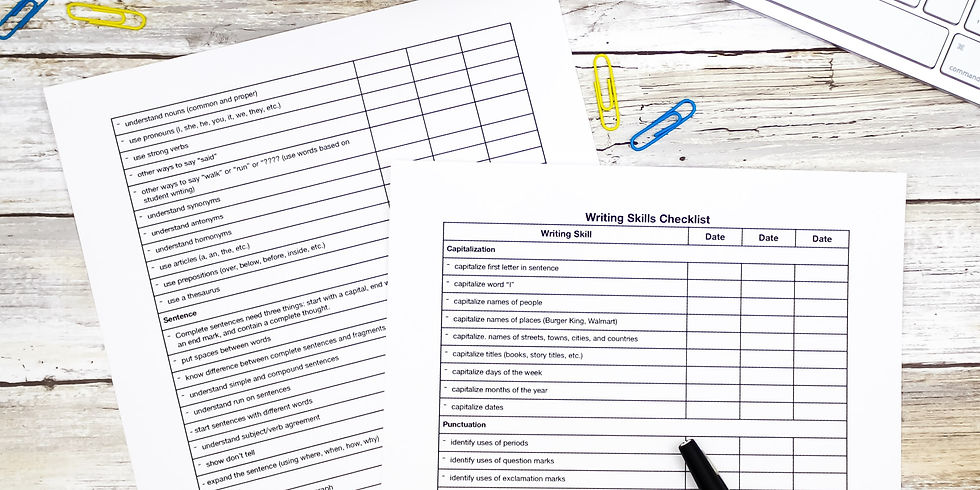
Add each mastered skill to an editing checklist kids use every time they write. Review older skills in quick writing talks throughout the year.
Think of it like a growing checklist. In September it has one item. By June it might have eight. Each time kids finish a piece of writing, they check it against the list.
Every few weeks, bring back an old skill for a two minute refresher. It keeps skills fresh without taking time away from new learning.
Teaching writing skills works best with a plan. Make a list for the year. Teach one skill at a time with short writing talks. Give lots of practice, and keep old skills on a checklist.
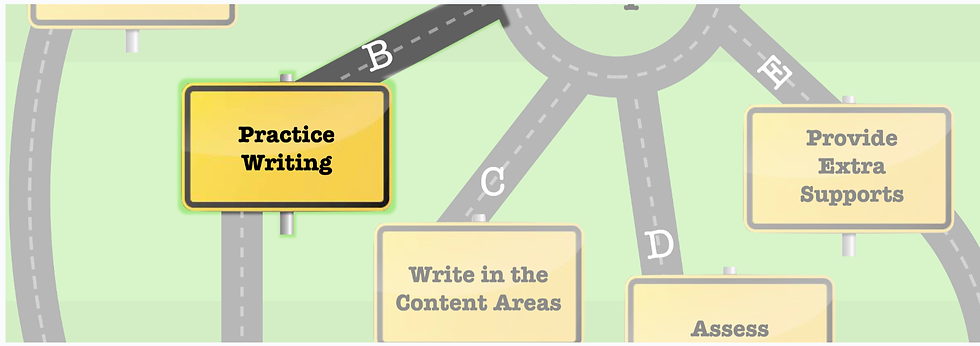
Once your students have new skills, they need places to use them. Your next stop is Action B: Narrative, Opinion, and Informative Writing in Grades 1 to 3.
New to the roadmap? Start with the full Writing Teacher's Roadmap.
Not sure where your class is on the roadmap? Take the free Writing Roadmap Quiz. You'll find your starting point and get the Writing Teacher's Roadmap Get Started Guide.


