
Types of Writing: Narrative, Opinion, and Informative Writing in Grades 1 to 3


"And then we went to the park. And then we had a snack. And then we went home."
You ask for an opinion piece, and you get a story. You ask for facts about frogs, and you get a story about a frog. Everything turns into "and then."
That's normal for young writers. Most kids only know one way to write: telling what happened. Our job is to show them there's more than one kind of writing, and each one has its own job.
That's Action B on the Writing Teacher's Roadmap: giving kids lots of practice with different types of writing.
What Are the Main Types of Writing for Primary Students?
There are three main types: narrative writing tells a story, opinion writing shares what you think, and informative writing teaches facts.
Here's how I explain them to kids:
Narrative writing tells a story. It has characters, a setting, and events in order. It can be real or made up.
Opinion writing tells what you think and why. It shares a choice and gives reasons.
Informative writing teaches someone about a topic. It uses facts, not feelings.
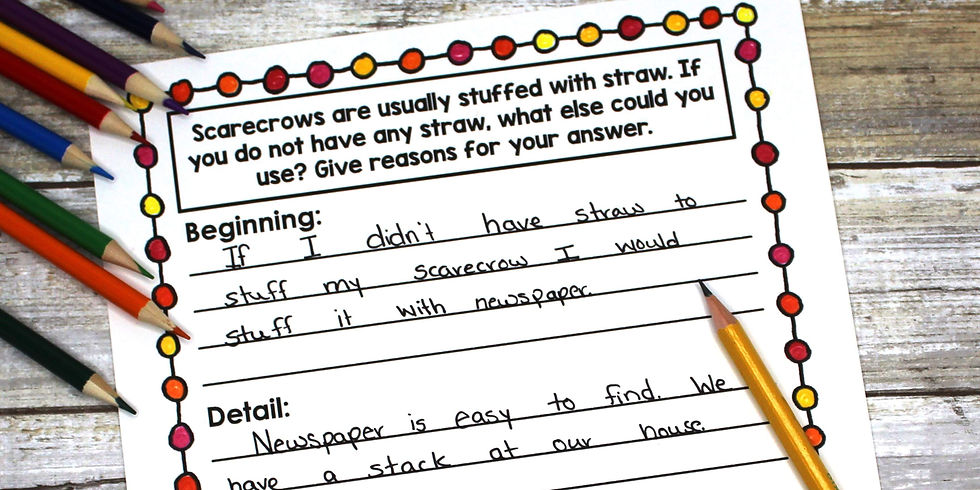
Other kinds of writing fit inside these three. Letters, how to writing, reports, poems, and journals all have a home. A how to piece is informative. A friendly letter might tell a story or share an opinion.
Posters help kids remember the difference. Hang posters to show each type of writing with a simple definition and example, so kids can check which one they're writing.
Which Type Should You Teach First?
Many teachers start with narrative, because kids already tell stories every day. Any order works, as long as you teach one type at a time.
Here's an order that works well in many primary classrooms:
Narrative in the fall, building on the stories kids already tell.
Informative in the winter, tied to science or social studies topics.
Opinion in the spring, once kids can write a few sentences in a row.
Then circle back. Kids understand each type more deeply the second time around.
How Do You Model a New Type of Writing?
Read an example, point out its parts, and write one together as a class. Then students write their own.
I think of it in three stages:
I do. Read a short example out loud. Ask, "What did the writer do here?"
We do. Write one together on chart paper. Kids share ideas while you write.
You do. Students write their own piece, with the class example posted nearby.
Here's what shared writing might look like for opinion writing. You write a simple frame on the board:
I think ___ is the best recess game.
One reason is ___.
Another reason is ___.
That's why I think ___.
The class chooses a game. Kids call out reasons. You fill in the frame together. Now every child has seen an opinion piece built from start to finish.
What Topics Keep Kids Motivated to Write?
Choose topics kids know and care about: animals, food, recess, holidays, and their own lives. When kids know a lot about a topic, they have more to say.
Narrative topics
The day I lost my tooth
My best birthday
A story about a puppy who got lost
Opinion topics
What's the best recess game?
Cats or dogs: which makes a better pet?
What's the best season of the year?
Informative topics
All about my favourite animal
How to make a sandwich
A letter telling Grandma about our class
Animals are a favourite with young writers. If your class loves them, my Animal Writing Activity and Opinion Writing Activity are free and ready to use. For a bigger informative project, my report writing post walks through the whole process.
How Long Should You Spend on Each Type of Writing?
Two to four weeks per type is a good rhythm. Move on when most students write three solid pieces of that type in a row.
That's the power of 3. Three strong pieces tell you kids understand the job of that type of writing. If they're not there yet, stay a little longer and add support.
Keep daily journal writing going during this time too. Kids can use journals for any type of writing they choose.
Your Next Stop on the Roadmap
Young writers grow when they practise many kinds of writing. Teach narrative, opinion, and informative writing one at a time. Model each one, choose topics kids care about, and give plenty of practice.

Your next stop is Action C: Writing Across the Curriculum in the Primary Grades.
New to the roadmap? Start with the full Writing Teacher's Roadmap.
Not sure where your class is on the roadmap? Take the free Writing Roadmap Quiz. You'll find your starting point and get the Writing Teacher's Roadmap Get Started Guide.


